

The first piece is a work of Choshitsu (carved lacquer) inspired by Tsuishu. This technique originated in 10th-century China and was introduced to Japan during the Kamakura period. Before the development of modern pigments, lacquerware primarily consisted of black and red. While this ancient technique often carries a heavy, dignified image, in this work, I have intentionally chosen "buoyancy" and a "light sense of air" as my motifs.
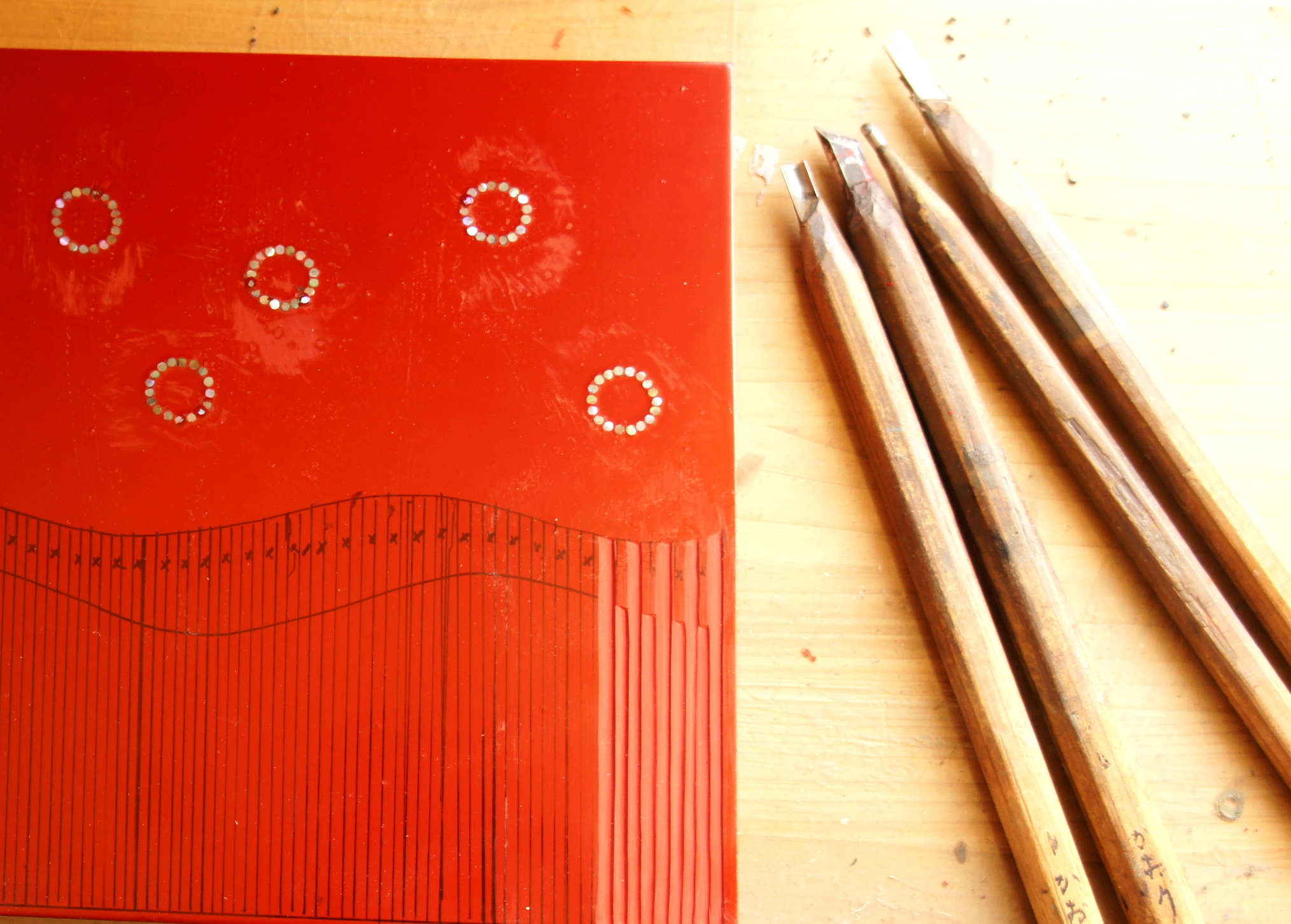
In progress: Choshitsu Panel "Utakata no Uta" (Ephemeral Song)
These two Kinma works in black-and-gold and red-and-gold explore the theme of "Reminiscence of Antiquity."
Black: A landscape of a night wrapped in silence.
Red: A landscape of mountains adorned with autumnal foliage.
The black and red of lacquer are colors that have existed unchanged for tens of thousands of years. I created these works while reflecting on the idea that people in the distant past might have gazed upon these very same scenes.
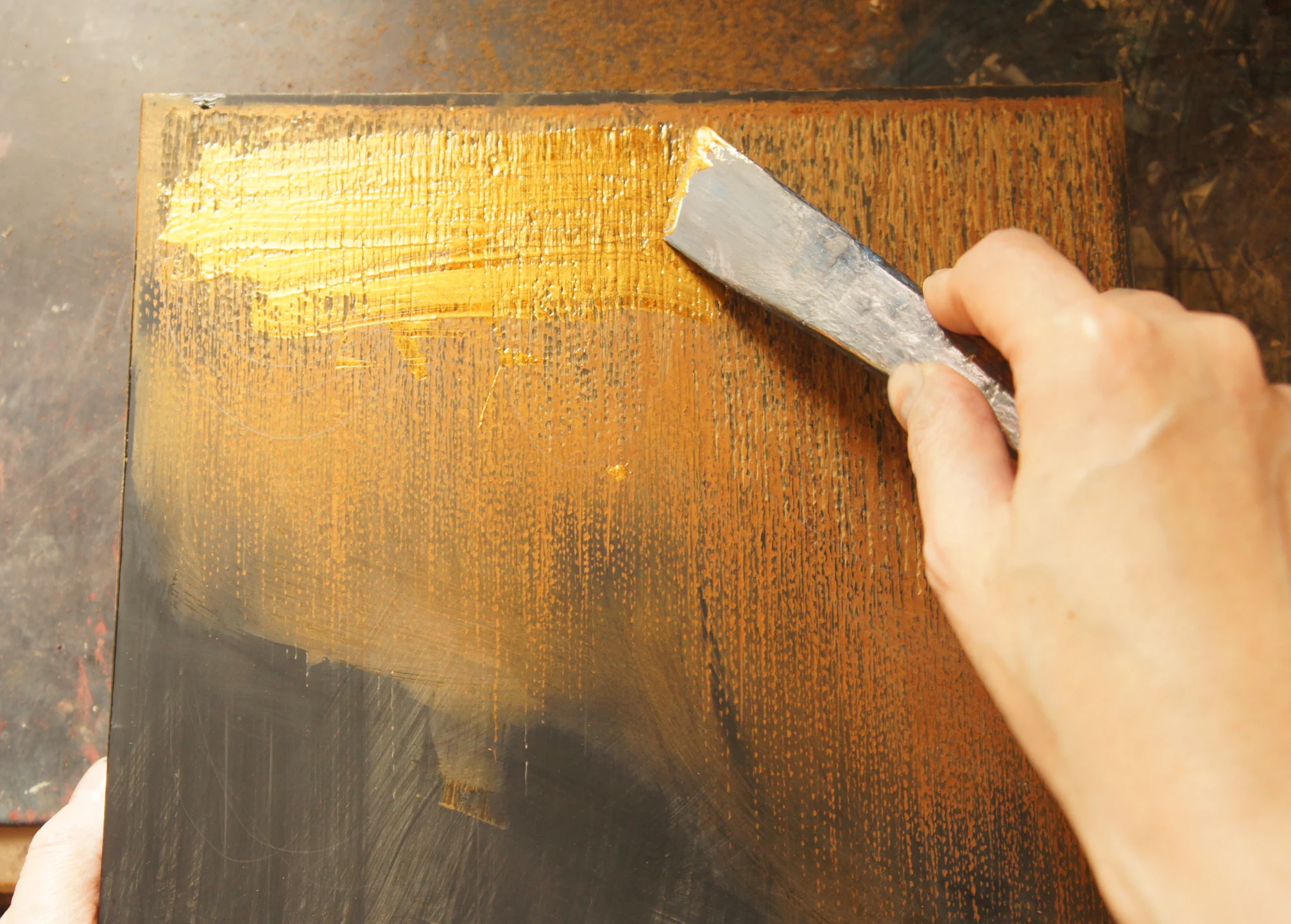
In progress: Kinma Panel "Tobari" (Veil of Night)
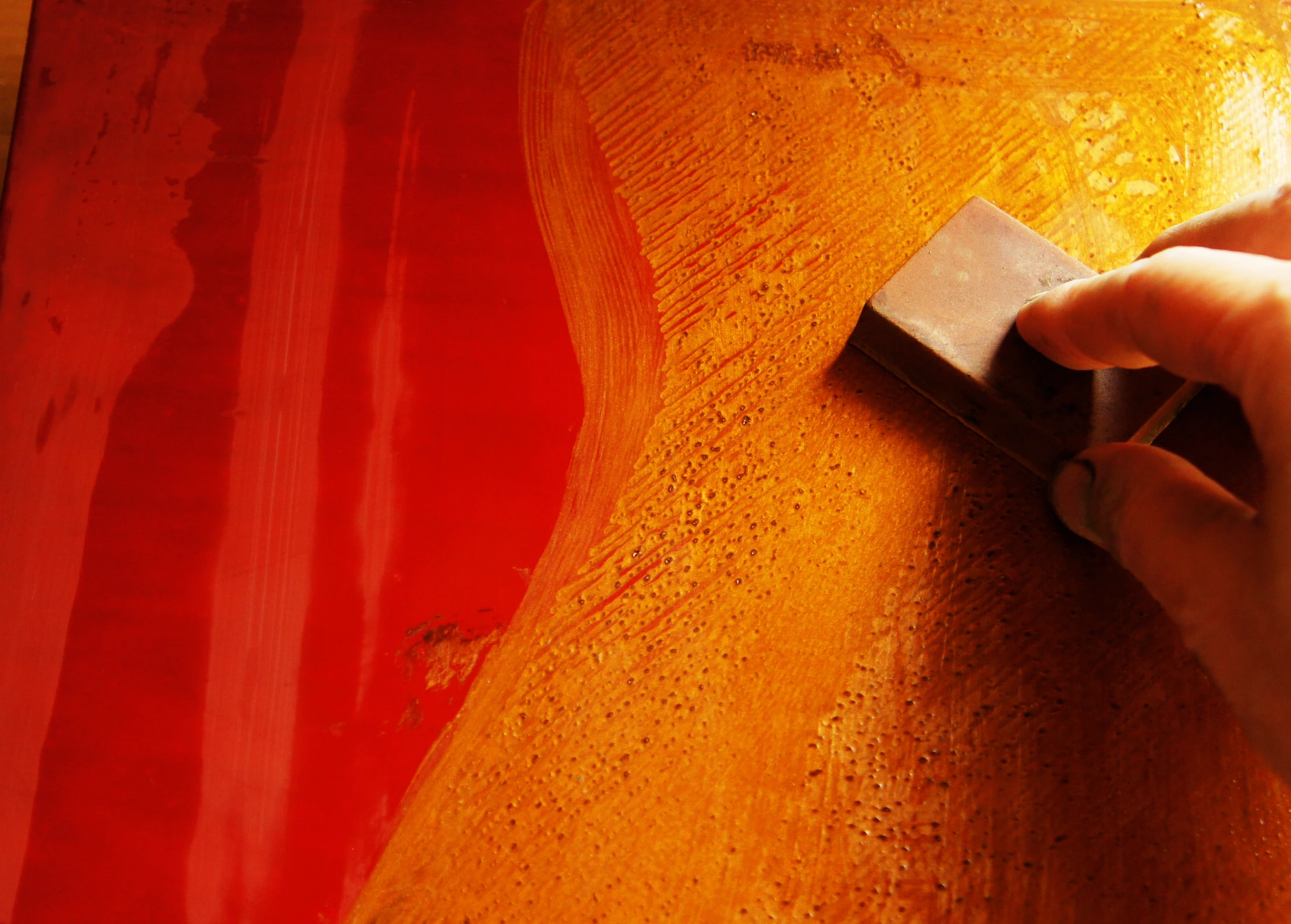
In progress: Kinma Panel "Nishiki no Mine" (Brocade Peaks)
This work captures the surface of the sea as it transitions from white to a deep navy blue. The Kinma process—engraving, filling with colored lacquer, and then polishing—is perfectly suited for expressing delicate gradients. The unexpected patterns that emerge at the moment of polishing overlap with the ever-changing expressions of the water.
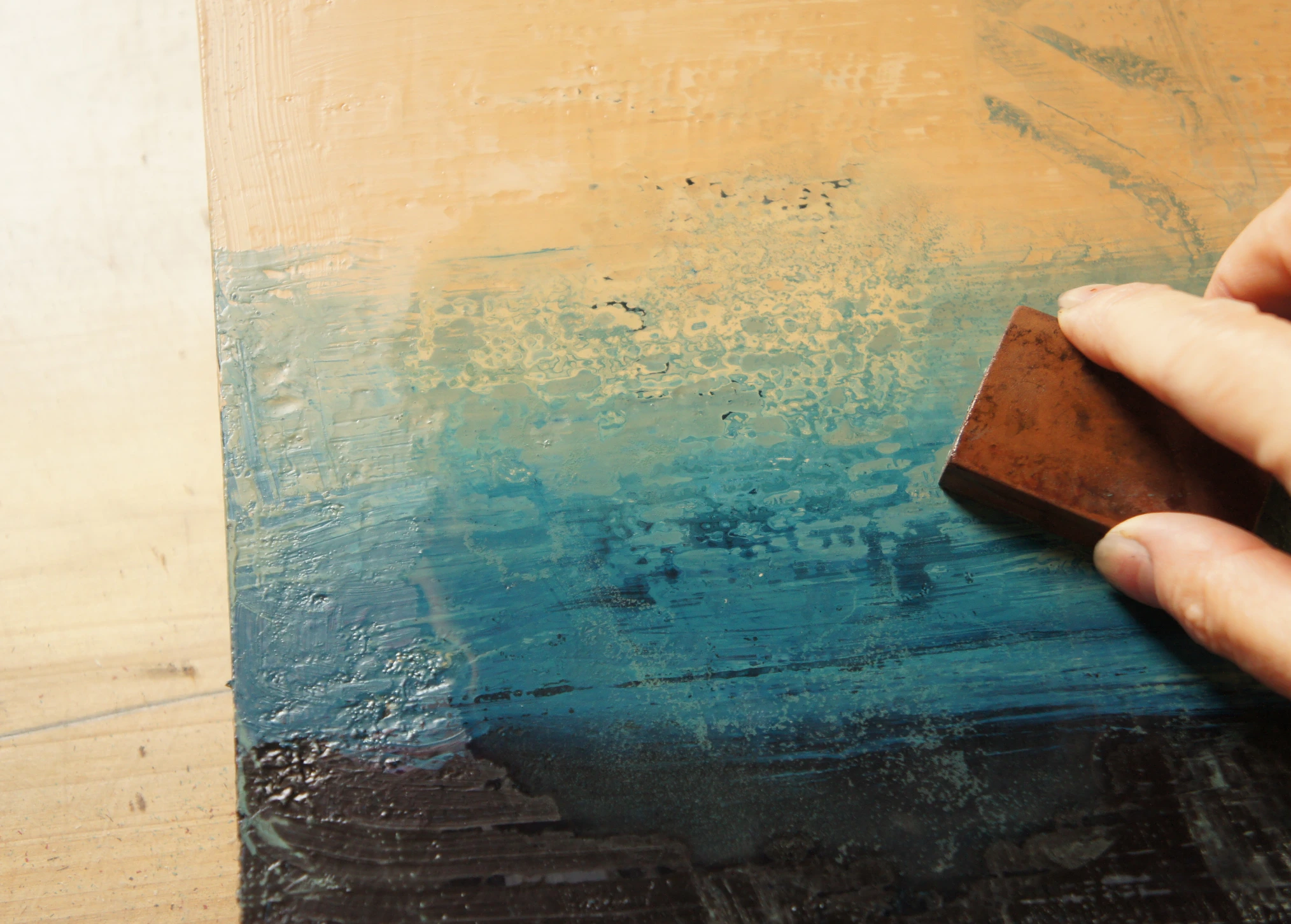
In progress: Kinma Panel "Nagi" (Calm Sea)
My morning 3km run, which I began in May last year, has now become a cherished ritual. Along the rustic trails, I encounter various wild birds every day. This morning, I saw a flock of more than twenty vibrant green budgerigars perched in the trees. Although I couldn't capture that exact moment on camera, here is a beautiful scene I encountered last week.
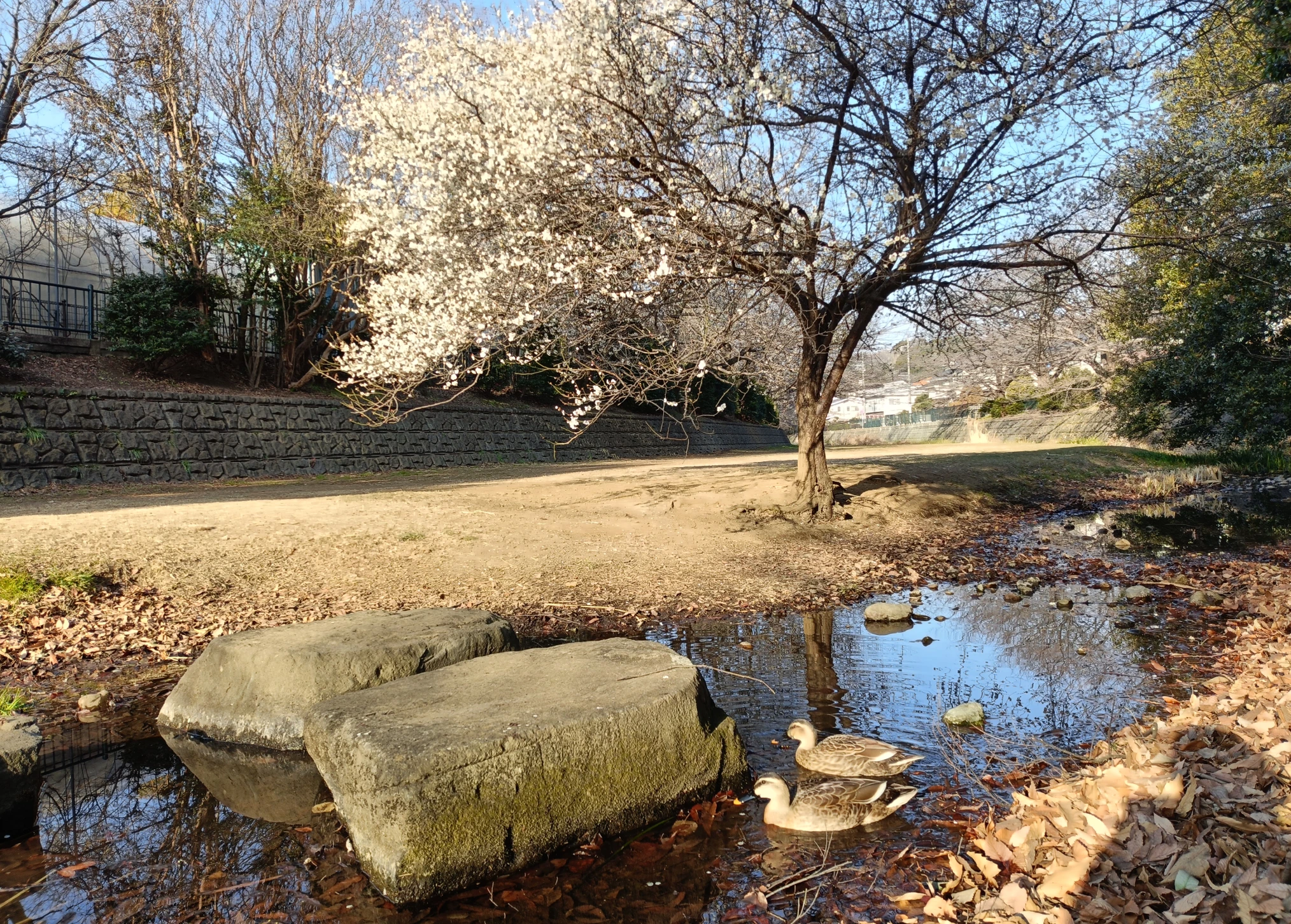
"Plum Blossoms and Ducks" by the water.
2026.02.10